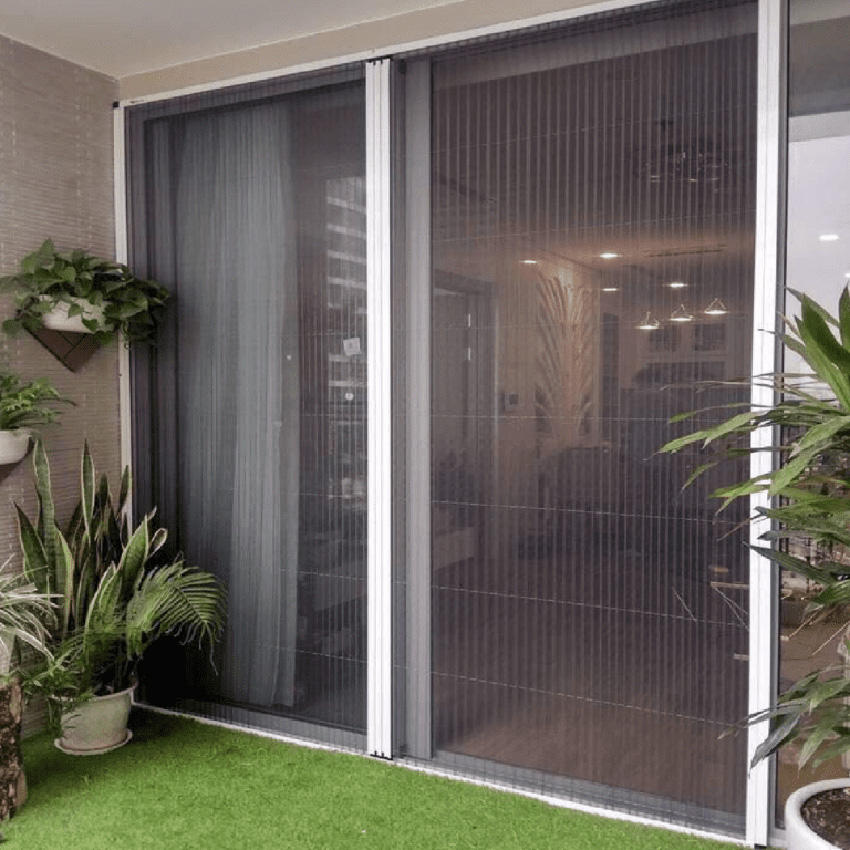
A screen is only as good as its fit. And a fit is only as good as the understanding of the opening it’s going into.
Windows and doors are not universal. A Victorian sash window in London, a double-hung window in Chicago, a louvre window in Brisbane and a tilt-and-turn window in Berlin are different structures with different frames, different depths and different ways of opening. A screen that works on one will not automatically work on another.
This guide covers the window and door types we produce for most often, and what matters when specifying a custom screen for each.
Sash Windows (UK, Ireland, Australia, older US housing) What they are: Two vertically sliding sashes, one overlapping the other. Common in Victorian, Edwardian and Georgian properties.
What matters for a screen:
The frame is rarely square. Measure the inner opening at the top, middle and bottom — take the minimum.
The sash cords and weights sit in the frame. A screen must not interfere with the cord or the weight pocket.
Many sash windows are in listed buildings. Adhesive fixing avoids drilling into historic timber.
Double-Hung Windows (US, Canada) What they are: Two vertically sliding sashes, similar to a sash window. The most common residential window in the US.
What matters for a screen:
The screen sits on the outside of the lower sash. Measure the lower sash opening, not the whole window.
If the sash has settled, the opening will be out of square. Take the minimum measurement.
For apartments, the screen needs adhesive fixing and full reversibility.
Single-Hung Windows (US, Canada) What they are: One fixed upper sash and one sliding lower sash. Common in newer builds.
What matters for a screen:
The screen sits on the outside of the lower sash, as with double-hung.
Newer frames are more likely to be square, but measure the same way.
Casement Windows (UK, Europe, US, Australia) What they are: Side-hinged windows, opened by a crank or a handle.
What matters for a screen:
The crank mechanism sits at the bottom or side of the frame. A screen must not obstruct it.
Measure the frame opening, not the sash. The screen sits against the frame, not the moving leaf.
For inward-opening casements, the screen is fitted to the outside face.
Awning Windows (US, Australia, Europe) What they are: Top-hinged windows, opened by a crank.
What matters for a screen:
The crank and the opening leaf sit at the bottom. A screen must clear both.
Measure the frame opening, as with casement.
Tilt-and-Turn Windows (Europe, newer US and UK builds) What they are: Dual-action windows that tilt inwards from the top or swing open from the side.
What matters for a screen:
The window opens in two directions. A screen must clear both operations.
Measure the frame opening. The screen sits against the frame, outside the moving leaf.
Retractable screens are often specified here, so the opening stays clear when the window is closed.
Louvre Windows (Australia, Singapore, tropical regions) What they are: A stack of horizontal glass blades that tilt open.
What matters for a screen:
There is no standard size. Every louvre frame is different in depth and blade angle.
Send photographs with the frame depth and blade angle. We cut to template.
Louvre screens need to sit clear of the blade movement.
Slider Windows (US, Australia, Singapore, Asia) What they are: Two or more horizontal panels that slide past each other.
What matters for a screen:
Measure the frame opening, not the sliding panel.
For apartment windows, adhesive fixing and reversibility are essential.
For large sliders, confirm panel configuration before production.
Bay and Corner Windows (UK, US, Australia) What they are: Angled windows projecting from the wall, or windows meeting at a corner.
What matters for a screen:
Each panel is a different shape and angle. Measure each one separately.
Cut to template — standard sizes won’t work.
Confirm whether the screen sits inside each opening or against the outer frame.
Arched and Shaped Windows (Heritage properties worldwide) What they are: Semi-circular, arched, circular or triangular openings.
What matters for a screen:
No standard size exists. Send photographs and dimensions, and we cut to template.
Confirm whether the screen follows the arch or sits in a rectangular frame behind it.
French Doors (UK, Europe, US, Australia) What they are: Double doors, usually opening outwards or inwards, often glazed.
What matters for a screen:
Measure the full opening, including both leaves.
Confirm whether the screen sits against the frame or over the doors.
For doors that open outwards, the screen is fitted inside.
Patio and Sliding Doors (US, Australia, Europe) What they are: Large glazed doors that slide horizontally.
What matters for a screen:
Measure the full opening, including the fixed panel.
Confirm the track position — the screen must not interfere with the sliding mechanism.
For multi-leaf and bi-fold openings, agree panel configuration before production.
Bi-Fold Doors (UK, Europe, Australia, US) What they are: Multiple panels that fold back on themselves.
What matters for a screen:
Measure the full opening and each panel.
Confirm the fold direction and the track position.
Panel configuration must be agreed before production so the screen doesn’t interfere with the fold.
Stable Doors (UK, Ireland, rural Europe) What they are: A door split horizontally into top and bottom leaves, which open independently.
What matters for a screen:
Measure the full door frame.
Confirm whether the screen covers the whole opening or only the bottom leaf.
The screen must not interfere with either leaf’s operation.
Why This Matters A screen that doesn’t match the opening type will fail — not because the product is poor, but because it was specified for the wrong structure. Knowing the window type is the first step in getting the specification right.
Get a Free Quote Send us photographs of your windows and doors, the dimensions, and your country. Tell us the window type where you know it, and whether you have cats, dogs or both. We’ll confirm the fit and the specification and reply within 24 hours.
WhatsApp: FSMBOR — send your size and country Email: reply within 24 hours
Message us your dimensions for a free quote.
A field guide to window and door types around the world — sash, double-hung, single-hung, casement, awning, tilt-and-turn, louvre, slider, bay, arched, French, patio, bi-fold and stable openings, and what matters when specifying a custom pet-proof screen for each, manufactured in Foshan and shipped to over 40 countries.