Folding Screen Doors vs Sliding Screen Doors: Which Is Better?
If you are choosing a screen door for a patio, balcony, or entryway, you will quickly run into two options: folding screen doors and sliding screen doors.
Both keep insects out. Both let air in. But they work very differently, and one is almost always a better fit for a given opening.
This guide compares the two honestly — how they operate, where each excels, and how to choose the right one for your home.
How Folding Screen Doors Work
A folding screen door is made of panels connected by hinges. When you open it, the panels fold accordion-style to one side, stacking compactly against the frame.
The key characteristics:
- Folds to the side — the panels stack, taking up very little space
- No floor track — most folding doors hang from a top rail, so the floor stays clear
- Wide opening — when fully open, the entire doorway is clear
- Panels can be solid or mesh — often a mix of both
Folding doors are common in villas, patios, and entryways where a wide, unobstructed opening matters.
How Sliding Screen Doors Work
A sliding screen door runs on a track, usually at the bottom, and slides horizontally to one side.
The key characteristics:
- Slides along a track — the door moves sideways, parallel to the wall
- Needs floor track — the track is a raised strip at the bottom
- Half-opening — when open, the door covers half the opening (or one panel of it)
- Single or double panel — smaller openings use a single sliding panel
Sliding doors are common in apartments and standard patio doors where space is limited.
Side-by-Side Comparison
| Feature | Folding Screen Door | Sliding Screen Door |
|---|---|---|
| Opening width | Full opening | Half opening |
| Floor space needed | None | Track along the floor |
| Operation | Pull to fold | Slide sideways |
| Pet-friendly | Excellent | Moderate |
| Threshold | Usually none | Raised track |
| Installation | Top rail mounted | Track mounted |
| Cost | Higher | Lower |
| Best for | Patios, villas, wide openings | Apartments, standard doors |
Space: The Decisive Factor
The biggest practical difference is space.
A folding door folds to the side and takes up almost no space. When open, the entire doorway is clear. This matters for patios, balconies, and entryways where you want an unobstructed opening.
A sliding door needs a track along the floor and slides parallel to the wall. It takes up less wall space than a hinged door, but it does need a clear track and a section of wall for the door to slide into.
For a wide opening (over 1.2 m), folding is almost always better. For a standard door (under 1 m), sliding may be sufficient.
Pet-Friendliness
If you have a cat or dog, the choice matters more than you might think.
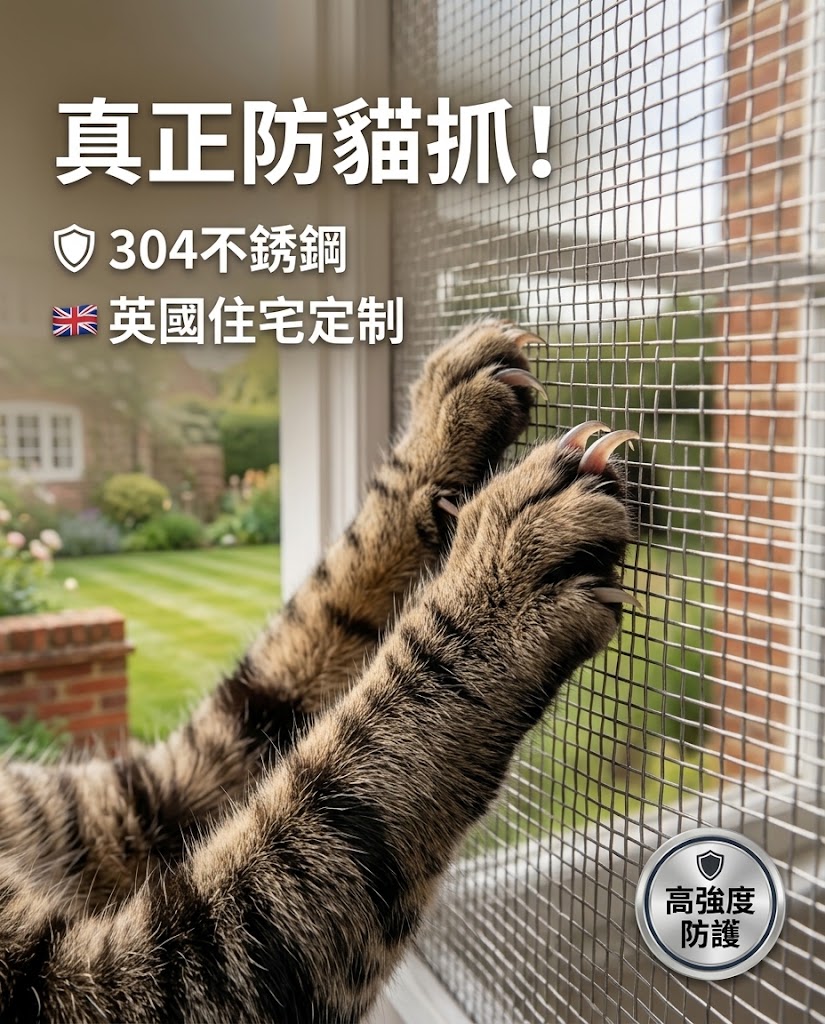
Folding doors are excellent for pets. The panels are sturdy, the mesh is typically 304 stainless steel (pet-proof), and the door can be opened partially — enough for a pet to pass through — without opening the whole doorway.
Sliding doors are moderate. The track at the bottom can be a trip hazard for small pets, and the mesh is often fiberglass (not pet-proof). If you choose sliding, upgrade to stainless steel mesh.
For homes with pets, folding is the better choice.
Installation
Folding doors hang from a top rail. Installation requires mounting the rail above the opening and hanging the panels. No floor track is needed, which means no drilling into the floor and no threshold to step over.
Sliding doors require a track at the bottom and a guide at the top. Installation involves mounting both, which is more involved. The track also needs to be kept clean — debris in the track causes the door to stick.
For renters or homeowners who do not want to modify the floor, folding is easier.
Aesthetics
Folding doors have a more architectural look — the panels create a visual rhythm, and the door reads as a design feature rather than a functional add-on. This makes them popular in villas and modern homes.
Sliding doors are more utilitarian. They are functional and unobtrusive, but they do not add much to the look of a space.
If aesthetics matter, folding wins.
Cost
Sliding doors are generally cheaper. The hardware is simpler, and the installation is less involved.
Folding doors cost more because of the hinge system, the top rail, and the panel construction. But they also last longer and add more value to the property.
For a budget-conscious project, sliding is fine. For a long-term home, folding is worth the investment.
When Sliding Is the Better Choice
Sliding doors are not always the wrong choice. They are better when:
- The opening is narrow (under 1 m) — folding does not add much value here
- The budget is tight — sliding is cheaper
- The opening is a standard patio door — sliding is the standard solution
- There is no room for the panels to stack — in very tight spaces, sliding may be the only option
For most other situations, folding is better.
When Folding Is the Better Choice
Folding doors are better when:
- The opening is wide (over 1.2 m) — folding gives a full clear opening
- You have pets — folding doors are pet-proof and can be partially opened
- You want an unobstructed threshold — no floor track means no trip hazard
- Aesthetics matter — folding doors look better
- You rent — folding doors are easier to install without floor modification
For patios, balconies, villas, and entryways, folding is almost always the better choice.
What to Look for in a Folding Screen Door
If you choose folding, here is what matters:
1. Mesh material
304 stainless steel is the standard for pet-proof and long-lasting screens. Fiberglass will tear.
2. Frame quality
Aluminum alloy frames are rust-proof, lightweight, and hold the panels under consistent tension.
3. Hinge quality
The hinges are the most stressed part of a folding door. Look for stainless steel or heavy-duty nylon hinges.
4. Top rail
The top rail carries the weight of the panels. It should be sturdy and well-anchored.
5. Custom fit
A folding door that does not fit tightly leaves gaps at the edges. Custom-made doors are cut to your exact measurements.
How to Measure for a Custom Folding Door
Custom doors only work if the measurements are correct. Here is the simple process:
- Measure the opening. Use a metal tape measure. Record the exact width and height in millimeters or inches.
- Measure at three points. For width: top, middle, bottom. For height: left, center, right. Use the smallest measurement.
- Take a photo. Place the tape measure against the frame and photograph it.
- Send it to us. Message us on WhatsApp with the measurements and photo. We confirm the fit before manufacturing.
This process takes about five minutes and eliminates the most common cause of custom door problems — incorrect measurements.
Final Thoughts
Folding and sliding screen doors both work, but they suit different situations.
For wide openings, patios, villas, entryways, and homes with pets, folding is the better choice. It gives a full clear opening, has no floor track, and is pet-proof by design.
For narrow openings, standard patio doors, and tight budgets, sliding is sufficient.
If you are not sure which type suits your opening, send us a photo and the measurements. We will recommend the right type and send a free quote within 24 hours.