How to Stop Your Cat from Scratching Through Window Screens
If you live with a cat, you already know the sound: the soft scratch-scratch at the window, followed by the unmistakable rip of fiberglass mesh. Within weeks, a screen that was supposed to last years is hanging in tatters — and your cat has a brand-new escape route.
This is one of the most common problems pet owners face, and it is almost never the cat’s fault. The problem is the screen itself. Standard window screens are simply not designed to survive claws.
This guide explains why cat scratching destroys ordinary screens, what actually works instead, and how to choose a custom pet-proof screen that will last for years.
Why Cats Scratch Window Screens
Cats scratch screens for several reasons:
- Curiosity and movement. A bird, a leaf, or a passing insect on the other side of the glass is irresistible. Your cat paws at the screen to get closer.
- Territorial behavior. Cats often scratch vertical surfaces to mark territory. A screen at eye level is a natural target.
- Climbing. Some cats treat screens as a ladder, especially if there is something interesting outside.
- Stress or boredom. Scratching is a displacement behavior. If a cat is anxious or under-stimulated, screens become a outlet.
None of this is unusual. The real issue is that fiberglass mesh — the material used in almost every standard screen — has a weave that catches claws. Once a claw snags, the mesh tears along the weave line, and the damage spreads quickly.
Why Standard Fiberglass Screens Fail
Most off-the-shelf window screens use fiberglass or aluminum mesh with a 1.5–2 mm weave. That weave is fine for keeping out mosquitoes, but it has two fatal weaknesses when it comes to cats:
- The weave catches claws. A cat’s claw hooks into the mesh and pulls. The fiberglass strands separate and tear.
- The material is brittle. Fiberglass becomes more fragile with UV exposure. A screen that survives one season may fail in the second.
Replacing a screen every few months is frustrating, expensive, and bad for the environment. The fix is not a thicker fiberglass mesh — it is a different material entirely.
304 Stainless Steel Mesh: The Solution
The most effective material for pet-proof screens is 304 stainless steel mesh. Instead of woven fiberglass, the mesh is made from fine stainless steel strands woven into a tight, durable grid.
The difference is dramatic:
- Claws cannot catch. The steel strands are smooth and strong. A claw slides off instead of snagging.
- Biting cannot tear. Even a determined chewer cannot rip through stainless steel.
- The mesh holds tension. Unlike fiberglass, stainless steel does not sag or stretch over time.
- It lasts for years. A quality 304 steel mesh screen can last 5–10 years or more, even in homes with multiple pets.
At MBORMC, every pet-proof screen uses 304 stainless steel mesh as standard. It is the same material used in industrial filtration and marine environments — chosen because it performs where other materials fail.
What to Look for in a Pet-Proof Screen
If you are shopping for a cat-proof screen, here is what matters:
1. Mesh material
Look for 304 stainless steel, not fiberglass or aluminum. The label should say “304” or “stainless steel mesh” explicitly. Avoid vague terms like “pet-resistant” without a material specification.
2. Frame quality
A strong mesh needs a strong frame. Aluminum alloy frames are rust-proof, lightweight, and hold the mesh under consistent tension. Powder-coated finishes add extra durability.
3. Custom fit
A screen that does not fit tightly leaves gaps — and a determined cat will find them. Custom-made screens are cut to your exact measurements, so there are no weak points at the edges.
4. Installation method
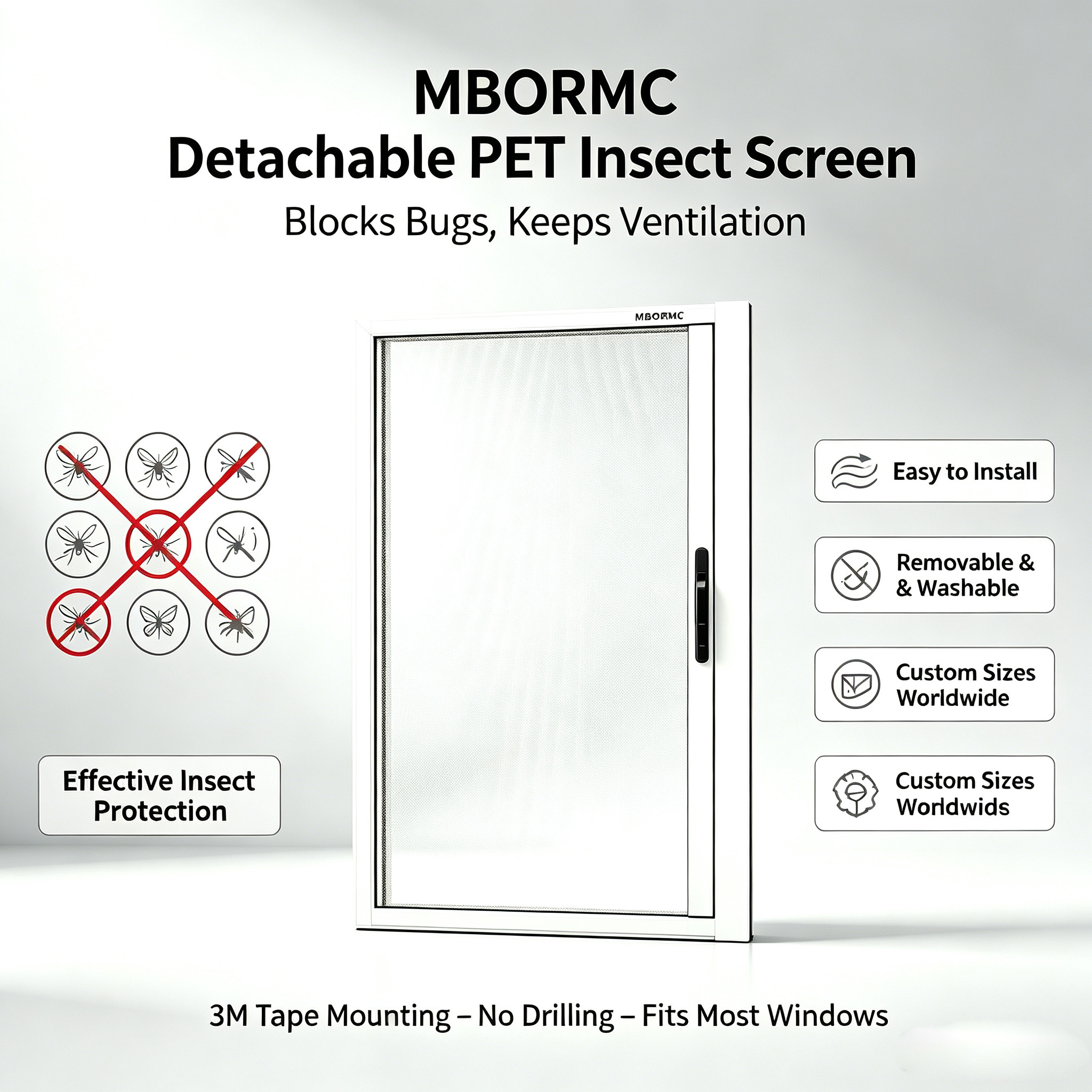
For renters and homeowners who do not want to drill, magnetic or 3M adhesive installation is ideal. It holds firmly but removes cleanly when needed.
5. Warranty
A manufacturer that stands behind its product will offer at least a one-year warranty on the frame and mesh. MBORMC offers two years.
How to Measure for a Custom Screen
Custom screens only work if the measurements are correct. Here is the simple process:
- Measure the opening. Use a metal tape measure. Record the exact width and height in millimeters or inches.
- Measure at three points. For width: top, middle, bottom. For height: left, center, right. Use the smallest measurement.
- Take a photo. Place the tape measure against the frame and photograph it. This helps our team confirm the measurement before production.
- Send it to us. Message us on WhatsApp with the measurements and photo. We confirm the fit before manufacturing.
This process takes about five minutes and eliminates the most common cause of custom screen problems — incorrect measurements.
Installation: Simpler Than You Think
A common misconception is that pet-proof screens are difficult to install. In reality, most custom screens install in under 15 minutes with no drilling required.
The two most common methods are:
- 3M industrial adhesive. The screen attaches directly to the window frame with high-strength tape. It holds firmly for years and removes cleanly without damaging the frame.
- Magnetic mounting. A magnetic strip runs around the frame, and the screen snaps into place. This is ideal for renters or for windows that need to be opened frequently.
Both methods are reversible. If you move, you can take the screen with you or remove it without leaving marks.
Common Mistakes to Avoid
Even with a good screen, a few mistakes can shorten its life:
- Using the wrong mesh. Fiberglass marketed as “pet-resistant” is still fiberglass. It will fail.
- Skipping the measurement confirmation. Custom screens are only as good as the measurements. Always confirm with the manufacturer before production.
- Installing on a dirty frame. Dust and oil prevent adhesive from bonding properly. Clean the frame with alcohol before installation.
- Ignoring the warranty. A warranty is a signal of quality. Choose a manufacturer that offers at least one year of coverage.
Final Thoughts
Cats scratch screens because screens are scratchable. The solution is not to train the cat out of natural behavior — it is to choose a screen that can handle it.
A custom pet-proof screen made with 304 stainless steel mesh, a quality aluminum frame, and a precise custom fit will last for years. It protects your cat, keeps insects out, and eliminates the cycle of constant screen replacement.
If you are ready to stop replacing torn screens, send us your window measurements on WhatsApp. We will send a free quote within 24 hours, and every screen is built to your exact specifications.