Magnetic vs Screw-Fixed Window Screens: Which Is Better for Renters?
If you rent your home, you already know the constraint: you want a screen that keeps insects out and lets fresh air in, but you cannot drill holes in the window frame or make permanent changes to the property.
This is where the choice between magnetic and screw-fixed window screens matters most. Both work. But only one is genuinely renter-friendly.
This guide compares the two options on the factors that matter to renters — installation, removal, damage risk, durability, and cost — so you can choose with confidence.
The Core Difference
Before comparing details, it helps to understand the fundamental difference between the two:
- Magnetic screens attach to the window frame with a magnetic strip. No tools, no drilling, no permanent changes. They snap on and off in seconds.
- Screw-fixed screens attach with screws driven into the frame or wall. They are permanent, stable, and cannot be removed without leaving holes.
Both types are available in custom sizes and both can be made with pet-proof or dust-filtration mesh. The difference is entirely in how they attach.
Installation: Magnetic vs Screw-Fixed
Magnetic screens
- Tools required: None
- Time: 5–15 minutes for a typical window
- Skill required: None
- Damage to property: None
- Reversible: Yes, in seconds
The magnetic strip adheres to the window frame with 3M industrial adhesive. The screen itself attaches to the strip magnetically. Installation is a matter of cleaning the frame, applying the adhesive strip, and snapping the screen into place.
Screw-fixed screens
- Tools required: Drill, screwdriver, measuring tools
- Time: 30–60 minutes per window
- Skill required: Basic DIY
- Damage to property: Holes in the frame
- Reversible: Difficult — holes remain
Screw-fixed screens require drilling into the window frame or wall. This is fine if you own the property. For renters, it is usually a dealbreaker — most leases prohibit drilling into window frames, and even if they do not, the holes remain after you move out.
Removal: What Happens When You Move?
This is where the difference becomes decisive for renters.
Magnetic screens
Removal takes seconds. You lift the screen off the magnetic strip, then peel the adhesive strip off the frame. If the strip has been in place for a long time, gentle heat from a hairdryer loosens the adhesive cleanly. No residue, no damage.
You can take the screen with you to your next home — if the new windows are the same size, it will fit. If not, the screen can be re-cut or replaced.
Screw-fixed screens
Removal requires unscrewing every screw and filling every hole. Even with careful patching, the frame will never look exactly as it did before. Most landlords will charge for this at move-out.
For renters, this is the single biggest reason to choose magnetic over screw-fixed.
Durability: Are Magnetic Screens as Strong?
A common concern is that magnetic screens are less secure than screw-fixed ones. In practice, the difference is smaller than you might expect.
A well-made magnetic screen uses a strong magnetic strip and a tight frame-to-frame seal. It holds firmly in normal wind and stays in place through daily use. It is not designed to withstand a hurricane, but neither is a standard insect screen.
Screw-fixed screens are more rigid and may be preferable in extreme wind zones or for very large openings. For a typical apartment window, a quality magnetic screen is more than sufficient.
At MBORMC, our H01 magnetic screen uses a 360° airtight magnetic seal and 3M industrial adhesive. It is designed to hold firmly for years while remaining fully removable.
Cost: Which Is More Affordable?
On paper, screw-fixed screens are often slightly cheaper — the hardware is simpler and there is less adhesive involved.
But the total cost tells a different story for renters:
- Magnetic screens: One-time purchase. Removable and reusable. No move-out repair costs.
- Screw-fixed screens: One-time purchase plus potential move-out repair costs (filling holes, repainting, landlord charges).
For renters who move every few years, magnetic screens are almost always the more economical choice over the long term.
Airflow and Insect Protection: Any Difference?
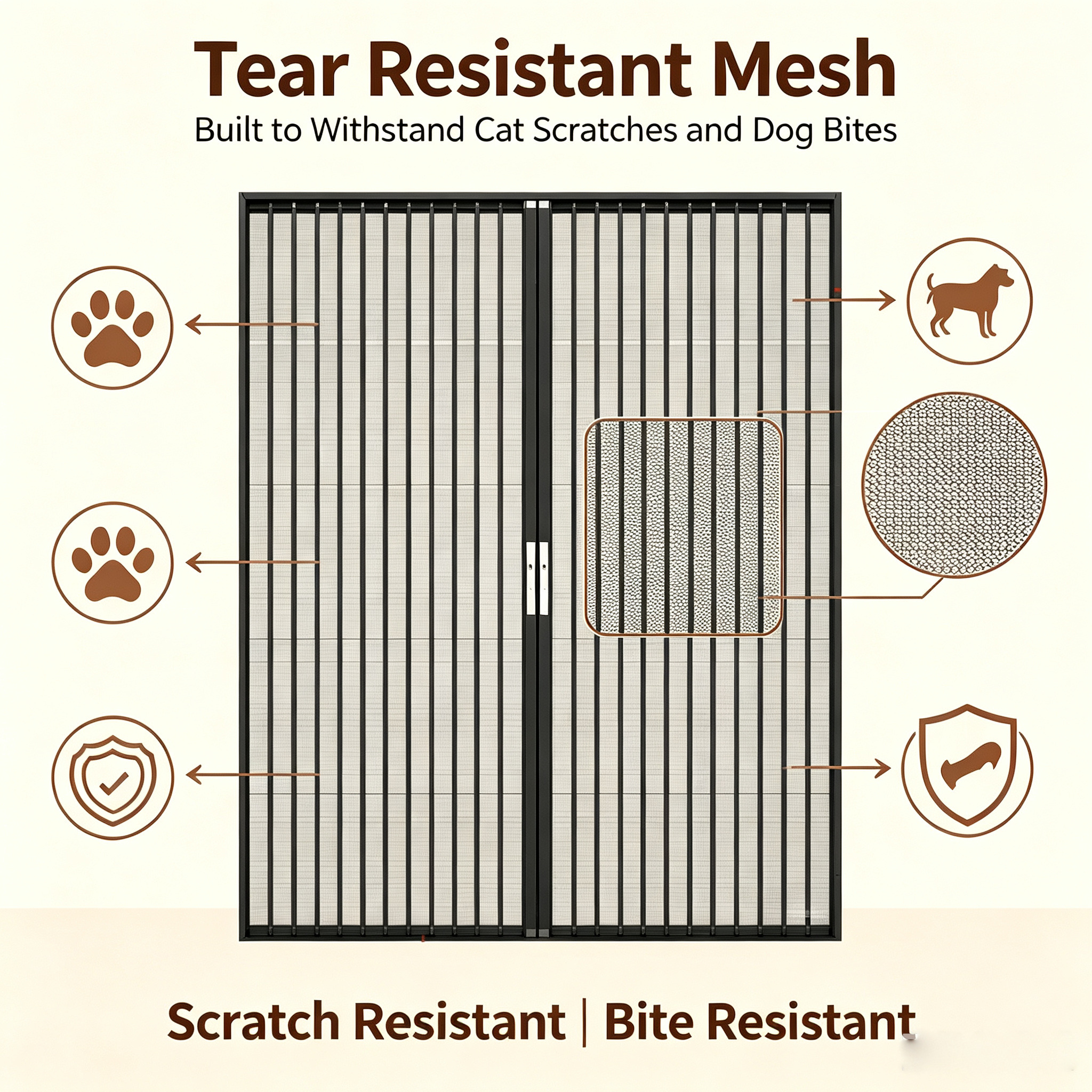
No. Both magnetic and screw-fixed screens use the same mesh options — fiberglass, PET, or 304 stainless steel. Both can be made with pet-proof mesh for homes with cats or dogs, and both can be made with dust-filtration mesh for allergy sufferers.
The attachment method does not affect the screen’s ability to keep insects out or filter dust. The mesh does.
Aesthetic Considerations
Magnetic screens typically have a slimmer frame than screw-fixed screens, because they do not need to support the weight of screws. This makes them less visually intrusive — an advantage in rental apartments where you may not want to alter the look of the window.
Screw-fixed screens often have a more industrial appearance, which is fine in a workshop or garage but less ideal in a living room.
When Screw-Fixed Screens Make Sense
Magnetic screens are not the right choice for every situation. Screw-fixed screens are preferable when:
- You own the property and plan to stay for many years.
- The opening is very large — for example, a wide patio door — where extra rigidity is helpful.
- The location is exposed to extreme wind — coastal areas, high-rise buildings, or storm-prone regions.
- Security is a priority — screw-fixed screens are harder to remove from outside.
For most renters in typical apartments, none of these conditions apply. Magnetic screens are the better choice.
What to Look for in a Renter-Friendly Magnetic Screen
If you are shopping for a magnetic screen, here is what matters:
1. Adhesive quality
3M industrial adhesive is the gold standard. Cheap adhesive strips lose grip over time, especially in hot climates.
2. Magnetic seal
A continuous magnetic strip around the entire frame provides a tighter seal than discrete magnetic points. This matters for both insect protection and dust filtration.
3. Frame quality
Aluminum alloy frames hold tension better than plastic or thin steel frames. They also look better.
4. Custom fit
A screen that does not fit tightly leaves gaps. Custom-made screens are cut to your exact measurements.
5. Removal method
A good magnetic screen should be removable without residue. Ask the manufacturer about their adhesive and removal process.
How to Measure for a Custom Magnetic Screen
Custom screens only work if the measurements are correct. Here is the simple process:
- Measure the opening. Use a metal tape measure. Record the exact width and height in millimeters or inches.
- Measure at three points. For width: top, middle, bottom. For height: left, center, right. Use the smallest measurement.
- Take a photo. Place the tape measure against the frame and photograph it. This helps our team confirm the measurement before production.
- Send it to us. Message us on WhatsApp with the measurements and photo. We confirm the fit before manufacturing.
This process takes about five minutes and eliminates the most common cause of custom screen problems — incorrect measurements.
Final Thoughts
For renters, the choice between magnetic and screw-fixed screens is not close. Magnetic screens offer the same insect protection and airflow, install in minutes, remove cleanly, and can travel with you to your next home.
Screw-fixed screens make sense for homeowners who plan to stay long-term, or for very large or exposed openings. For everyone else — especially renters — magnetic is the practical choice.
If you are ready to install a renter-friendly magnetic screen, send us your window measurements on WhatsApp. We will send a free quote within 24 hours, and every screen is built to your exact specifications.