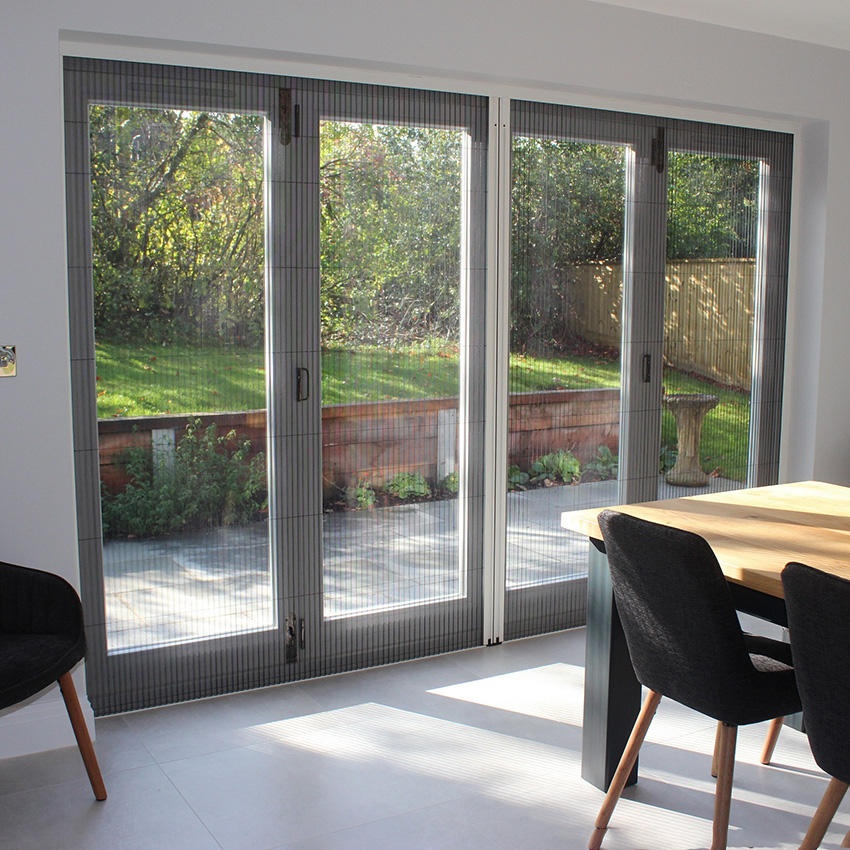
Nobody plans a window screen. It comes with the house, or it gets bought in a hurry when the insects arrive, and then it’s forgotten until something goes wrong.
What goes wrong is usually the dog.
A dog leans on the window to watch the street. A cat sits on the sill and hooks a claw into the mesh. The screen snags, sags, and starts letting in everything it was meant to keep out. By the time anyone notices, the weave is loose and the frame has given up.
The screen was never designed for that. It was designed for insects, in a factory, to a standard size. Pets weren’t part of the specification.
What Pets Actually Do to a Window Cats claw. A cat hooks a claw into the mesh to get closer to a bird, a leaf or an insect. Nylon and fiberglass strands break or stretch, and the weave unravels from that point.
Dogs lean. A dog puts its weight against the frame to get a better view. A flexible frame flexes, the fixings work loose, and the mesh tears at the edge.
Both shed. Hair and dander settle into the mesh. Coarse mesh lets them through; fine mesh catches them, but must be washable.
Both bring in moisture. A wet coat pressed against the screen leaves synthetic mesh damp, and damp mesh supports mould.
Why Standard Screens Fail Wrong mesh. Fiberglass and nylon are designed for insects, not claws or impact. They snag on the first scratch and unravel from there.
Wrong frame. Flexible plastic and thin-gauge aluminium flex under contact. Once the frame flexes, the mesh loosens at the edge.
Wrong fit. Standard sizes leave an edge gap on older or irregular windows. A gap lets in insects, dust and pollen — and gives a pet a starting point to work at.
Wrong fixing. Screw-fixed screens leave holes and cost renters their deposit. Track systems collect hair and debris and can’t be cleaned quickly.
What We Build Instead We manufacture custom pet-proof dust screens in our 12,000㎡ factory in Foshan and ship them factory-direct to the US.
Ultra-fine dust mesh — blocks fine dust and up to 99% of insects while maintaining roughly 80% ventilation. It captures pollen, urban particulate and pet hair, and resists claw snagging.
304 stainless steel mesh — densely woven, impact-resistant, non-deforming. A dog can lean on it, a cat can claw it, and the weave holds. It’s non-absorbent, so it doesn’t support mould growth, and it doesn’t go brittle in cold.
Rigid aluminium frame — doesn’t flex under contact, doesn’t warp in humidity, doesn’t rust.
Custom cut to the opening — including the irregular frames common in older American housing. No edge gap.
3M adhesive fixing — no drilling, no screws, fully reversible. For renters, it protects the deposit. For homeowners, it’s a reversible upgrade.
Clip-out panels — press the catches, lift the panel out, rinse it, let it dry, clip it back. A screen that can’t be cleaned isn’t a filter, it’s a dust trap.
Window Types We Make Them For Double-hung and single-hung windows — the most common windows in US homes
Casement and awning windows — in newer homes and apartments
Horizontal slider windows — in apartments and condos
Bay and corner windows — in older houses
Sunroom and porch windows — large openings, wind exposure
Arched and irregular openings — cut to template
Send us your window dimensions and a photo of the window type, and we’ll confirm the fit before production.
Regional Notes for US Homes Northeast and Midwest — freeze-thaw cycles and road salt. Specify stainless steel mesh and aluminium frames; synthetic mesh goes brittle in winter.
South and Southeast — humidity, mould and heavy pollen. Specify stainless steel mesh, which is non-absorbent and doesn’t support mould growth.
Southwest and desert states — fine sand, dust storms and high heat. Specify stainless steel mesh; rinse after every dust storm.
West Coast and wildfire regions — fine smoke particulate. Specify stainless steel mesh, and rinse after every smoke event.
Coastal states — salt air and corrosion. Specify stainless steel mesh and aluminium frames.
How It Works Measure your window — width and height at the frame edge. Take the minimum measurement where the frame isn’t square.
Send dimensions and photos — we confirm the fit before production, free of charge.
Choose your mesh — ultra-fine or stainless steel, according to your climate and your pets.
Get a quote — detailed quotation within 24 hours. Samples available.
Production and shipping — bulk production 15–25 days, shipped to the US by sea or air.
Install — adhesive fixing, no drilling required.
Shipping to the US Method Best for Transit time Sea freight Bulk orders, full house 20–35 days, most economical Air freight Urgent orders, mid-volume 5–10 days Express (DHL/FedEx) Samples and small orders 3–7 days, door-to-door Customs support and full logistics coordination included. LCL and FCL available.
Get a Free Quote Send us your window dimensions, a photo of the window type and your state. Tell us whether you have cats, dogs or both, and whether dust, pollen, smoke or humidity is a particular concern. We’ll recommend the right mesh and frame and reply within 24 hours.
WhatsApp: FSMBOR — send your size and country Email: reply within 24 hours
Message us your window size for a free quote.
US pet-proof dust screens — ultra-fine mesh blocks dust and 99% of insects, stainless steel mesh resists mould and clawing, rigid aluminium frames, custom-cut to the opening, 3M adhesive fixing without drilling, removable and washable panels, for double-hung, casement, slider, bay, sunroom and porch windows, custom-made in Foshan, shipped across the United States.