If you rent an apartment in the US and you have a cat, there’s a good chance your window screen is already damaged.
Not because the cat is destructive. Because apartment screens are usually the cheapest thing in the building. Thin fiberglass mesh, a flexible frame, and a fit that was never precise to begin with. A cat sits on the sill, hooks a claw into the mesh, and the weave starts to unravel. Within weeks there’s a run of loose threads and a hole.
Then comes the choice: report it to the landlord and accept the deduction, or leave it and hope nobody notices at move-out. Neither is a good option. The third option is to fit a screen that doesn’t fail in the first place — one that doesn’t need drilling and can be removed before inspection.
Why Apartment Screens Fail So Quickly They’re built to a price. Rental-grade screens use the thinnest mesh and the cheapest frame that will pass a building inspection. They’re not designed to survive a pet.
Double-hung windows put the screen where the cat is. The most common apartment window in the US is the double-hung. The screen sits on the outside of the lower sash — exactly where a cat sits to watch the street. It takes the full weight and claw contact.
The fit is approximate. Older apartment buildings have irregular window frames. A standard screen leaves an edge gap, which lets in insects, dust and pollen — and gives the cat a starting point to work at.
They can’t be cleaned. Spline-and-track screens are fixed in place. They clog with dust, pollen and pet hair and stay clogged for the life of the tenancy.
They’re not yours to replace. In many rentals, the screen belongs to the landlord. Damaging it is a deposit issue, not a maintenance request.
What a Rental-Friendly Screen Needs to Do Not require drilling — so the deposit is protected
Be fully removable — so it can come off before inspection or move-out
Fit the actual opening — so there’s no edge gap
Survive a cat — so it doesn’t need replacing every few months
Come out for cleaning — so it doesn’t clog and stay clogged
Preserve airflow — so the window can stay open in summer
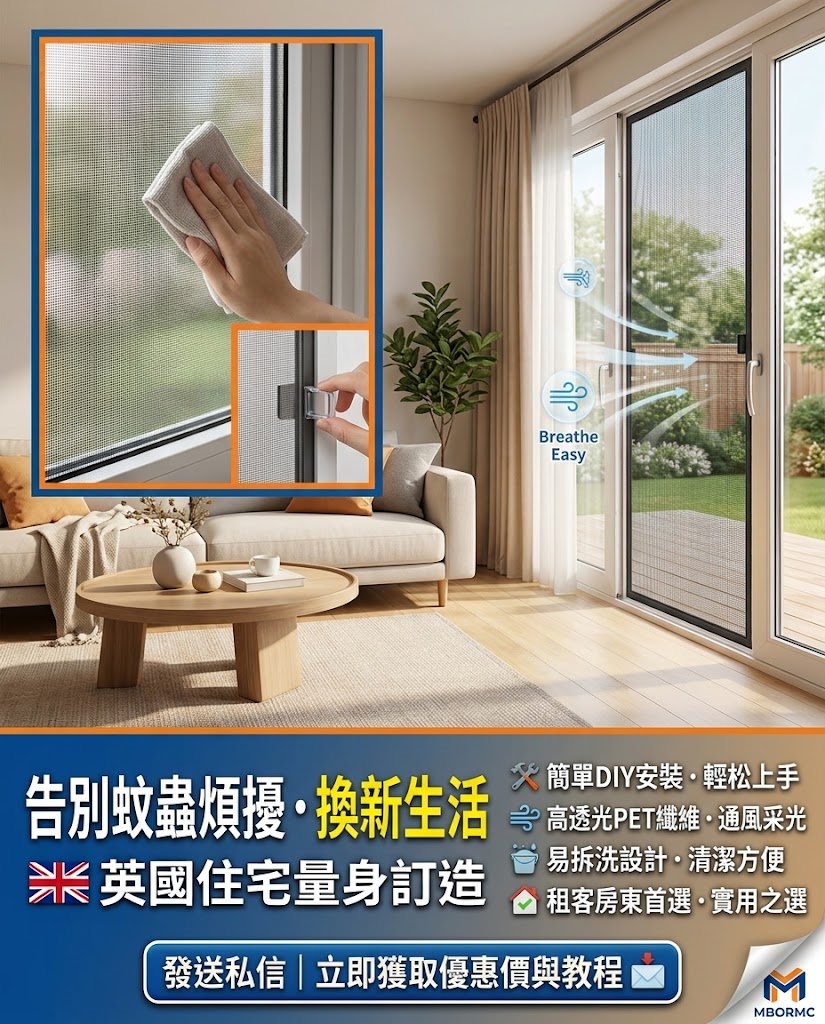
How Ours Works 3M adhesive fixing. No screws, no brackets, no holes in the frame, wall or sill. The screen sits against the frame and lifts away cleanly when you move out.
Custom-cut to your opening. Every screen is measured and cut to your window — including the irregular frames common in older apartment buildings.
304 stainless steel or ultra-fine mesh. Stainless steel resists clawing and leaning without deforming. Ultra-fine mesh resists claw snagging and captures dust and pollen. Both are specified for the climate you live in.
Rigid aluminium frame. Doesn’t flex when a cat leans on it, doesn’t warp in humidity, doesn’t rust.
Clip-out panels. Press the catches, lift the panel out, rinse it, let it dry, clip it back. Dust, pollen and pet hair wash straight off.
Deposit-safe. No holes, no damage, no replacement cost. The screen is yours, and it comes with you when you move.
Window Types We Make Them For Double-hung windows — the most common apartment window in the US
Single-hung windows — in newer buildings
Casement and awning windows — in newer apartments
Horizontal slider windows — in apartments and condos
Bay windows — in older apartment buildings
Fixed and picture windows — in newer blocks
Small bathroom and kitchen windows — often non-standard
Send us your window dimensions and a photo of the window type, and we’ll confirm the fit before production.
Regional Notes for US Renters New York, Boston, Chicago — older apartment buildings, non-standard frames, radiators under sills. Specify a frame that clears the radiator and a fit that sits flush against the sash.
Los Angeles, San Francisco, Seattle — wildfire smoke seasons. Specify stainless steel mesh and rinse after every smoke event.
Miami, Houston, New Orleans — humidity, mould and mosquitoes. Specify stainless steel mesh, which is non-absorbent and doesn’t support mould growth.
Phoenix, Las Vegas, Tucson — desert dust and high heat. Specify stainless steel mesh; rinse after every dust storm.
Denver, Minneapolis, Cleveland — freeze-thaw cycles. Specify stainless steel mesh and aluminium frames; synthetic mesh goes brittle in winter.
High-Rise Safety In a high-rise apartment, the screen must sit flush against the frame with no edge gaps, hold firm against pushing and leaning, and be checked after installation and again after 24 hours. For high-rise windows, specify stainless steel mesh for maximum rigidity.
How It Works Measure your window — width and height at the frame edge. Take the minimum measurement where the frame isn’t square.
Send dimensions and photos — we confirm the fit before production, free of charge.
Choose your mesh — stainless steel or ultra-fine, according to your climate and your cat.
Get a quote — detailed quotation within 24 hours. Samples available.
Production and shipping — bulk production 15–25 days, shipped to the US by sea or air.
Install — adhesive fixing, no drilling required.
Shipping to the US Method Best for Transit time Sea freight Bulk orders, multiple apartments 20–35 days, most economical Air freight Urgent orders, mid-volume 5–10 days Express (DHL/FedEx) Samples and small orders 3–7 days, door-to-door Customs support and full logistics coordination included. LCL and FCL available.
Get a Free Quote Send us your window dimensions, a photo of the window type and your state. Tell us whether you have cats, dogs or both, and whether dust, pollen, smoke or humidity is a particular concern. We’ll recommend the right mesh and frame and reply within 24 hours.
WhatsApp: FSMBOR — send your size and country Email: reply within 24 hours
Message us your window size for a free quote.
US apartment and rental pet-proof window screens — 3M adhesive fixing without drilling, fully reversible and deposit-safe, ultra-fine mesh blocks dust and 99% of insects, stainless steel mesh resists mould and clawing, aluminium frames, for double-hung, single-hung, casement, awning, slider and bay windows, custom-made in Foshan, shipped across the United States.